Blogs
Advice for SMEs in Spanish America
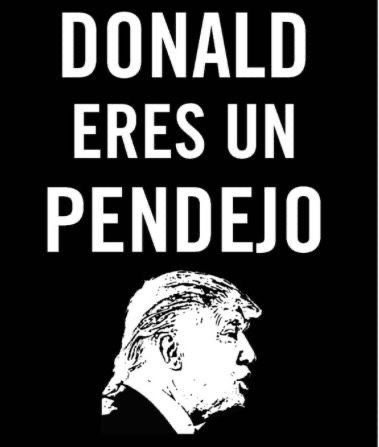
An anti-colonial statement is Trump’s legitimization for unilateral military power. As I am passionate about factual information, history and see it as one of my tasks to inform SMEs in Spanish America about our (European) point of view regarding recent developments in the South American region, in the Dutch Financieele Dagblad a nice history lesson from historian Eline van Ommen, associate professor of International History at the University of Leeds in the United Kingdom. She argues that the gross and illegal U.S. violation of Venezuela's sovereignty and arrest of Maduro is unprecedented — even in the history of U.S. interventions in Latin America. The previous intervention in the region was in 1989 , when the United States invaded Panama, resulting in hundreds of civilian deaths. The Monroe Doctrine of 1823 , when the United States had been in existence for less than 50 years, was a declaration of solidarity, a political speech in which the fifth U.S. President James Monroe called for cooperation between like-minded and sovereign American republics – including Venezuela, which in 1821 became definitively independent from Spain – to keep European monarchies with colonial ambitions at bay. An anti-colonial statement that focused on European colonial interference in the Western Hemisphere being unacceptable . At that time, there were many more powerful European powers. In 2026 , however, Trump is using the Monroe Doctrine as a unilateral American declaration of power . Latin America is said to be the 'backyard' of the US, in which the rest of the world has no business interfering. It is Trump's legitimization for unilateral military intervention. More on this: https://www.politico.eu/article/donald-trump-western-hemisphere-americas-tariffs-panama-canal/?utm_source=RSS_Feed&utm_medium=RSS&utm_campaign=RSS_Syndication

Your website is yours. As I look back on the projects I worked on for SMEs in Spanish America the last couple of months, there are a few subjects that all projects have in common across countries and which I will further dive into at a later stage. One subject I want to start with is the fact that companies heavily rely on social media and messaging apps for client and sales communication and why they should change this. I have explained the importance of creating (or improving) a website, being a channel that a company owns, fully deciding its design and content. The caveat is to be aware to store your website with a national cloud providor, due to the North American Cloud Act. What is the Cloud Act? It is a US federal law of 2018 (Clarifying Lawful Overseas Use of Data Act) that forces US technology companies to deliver data from their customers, regardless of where they are stored (including in data centres in Spanish America or Europe) if requested by US court order. The law also applies to European (and Latin American) organisations that use North American cloud services (such as Microsoft, Google, Amazon), allowing data in Europe (and Latin America) to be accessible to US authorities. What The Netherlands and Europe are doing, among other things, is creating awareness for this risk: Research has been done on the degree of dependence, and there is more awareness among governments and companies.

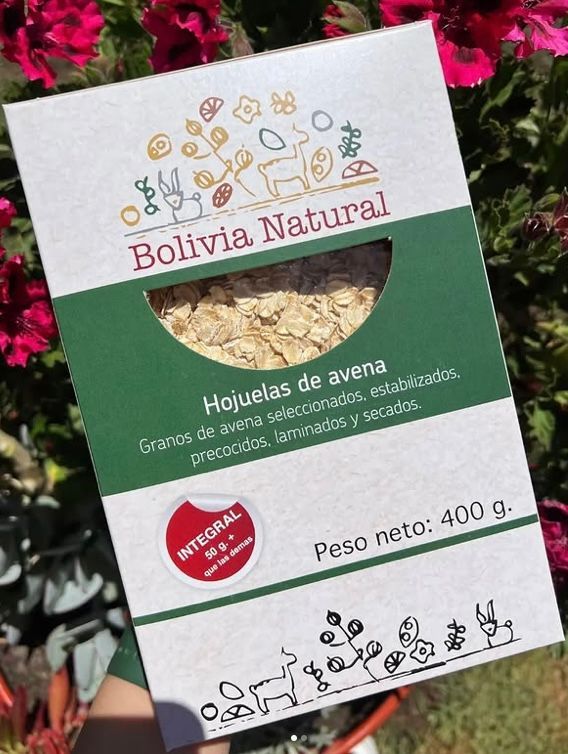
The Project. Supporting a Bolivian business in processing and selling natural Bolivian cereals to win a new client group. Bolivia Natural approached PUM to help them improve their market position and increase sales. As this is a remote project, we focused on the most pressing element of their more extensive briefing, which is to help them with tapping into a new market opportunity. Due to the economic challenges Bolivia faces, spending power of the population has reduced, import prices of quality oat have risen to sky high levels and as a result, sales prices have risen quite substantially as well. The more affluent population can more or less absorb these price increases, there is a loyal clientele, but overall sales are impacted negatively for many entrepreneurs and overall there is scarcity of food and other imported products. Adapting to these circumstances is a must and innovation critical. To make up for declining sales of the company's more upmarket product offering, Bolivia Natural needs to innovate and bring a product to market for people with less spending power. As this project is still ongoing, I will update once appropriate.